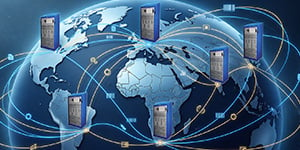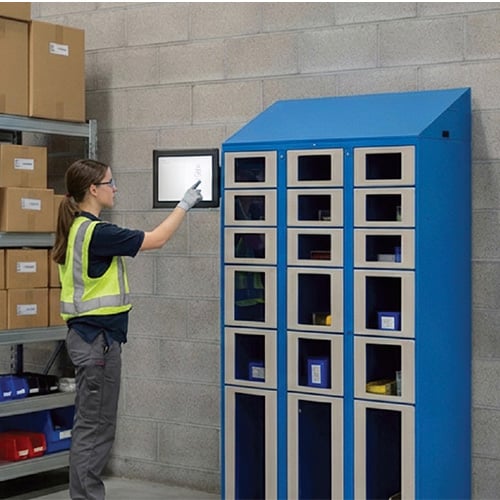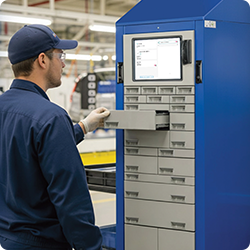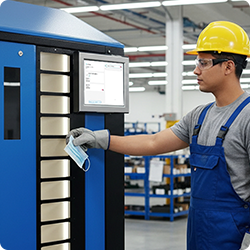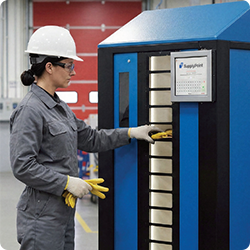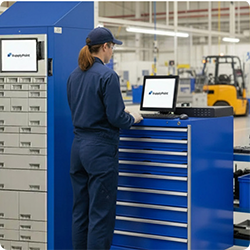
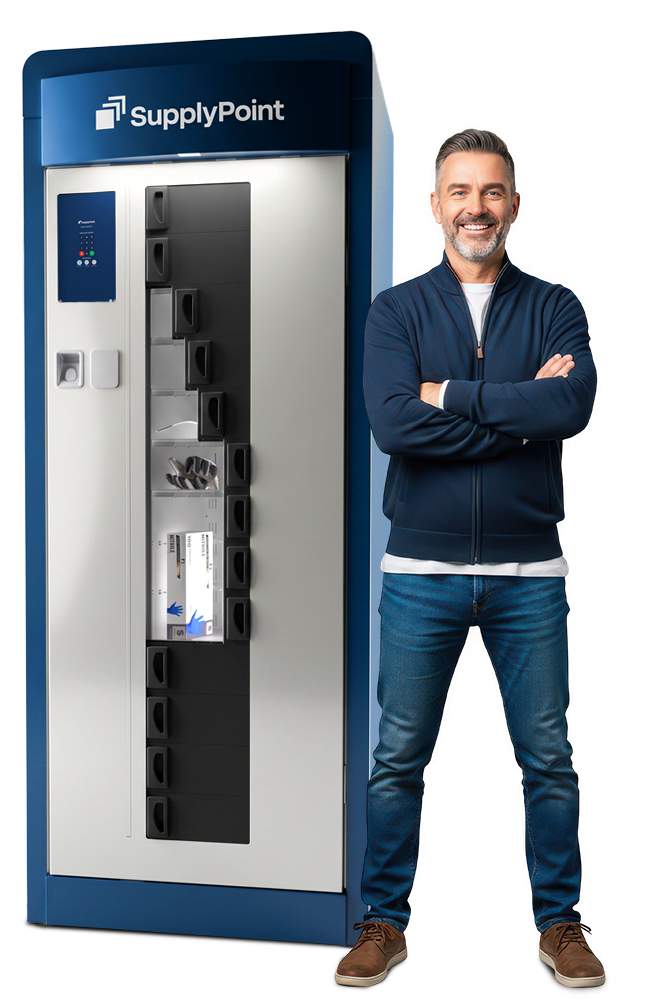
Do you control your inventory or does it control you? A modern inventory management company provides the tools to put you firmly in the driver’s seat. From smarter software capable of tracking individual pieces to hardware that can be customized to fit your operations, SupplyPoint offers you Total Inventory Control.
LEARN MOREAre you a Distributor? Learn how vending can drive your business.
What are the 4 types of inventory management?
The four main types of inventory management are Just-in-Time (JIT), ABC analysis, Economic Order Quantity (EOQ), and Material Requirements Planning (MRP). Each method focuses on balancing stock levels, cost control, and demand planning. Modern inventory management solutions often combine these approaches with real-time tracking technology to improve accuracy and visibility.
What are the best inventory management software options?
The best inventory management software depends on the complexity of your operation and the level of control required. Industrial organizations benefit most from systems that provide real-time transaction tracking, access control, analytics, and multi-site visibility. Leading inventory management companies integrate hardware and cloud software to support tooling inventory management and point-of-use governance.
What is the 80/20 rule in inventory?
The 80/20 rule, or Pareto Principle, states that roughly 80% of inventory consumption typically comes from 20% of items. This concept helps organizations prioritize high-value or high-usage products and apply stronger controls where they will have the greatest financial impact. Data-driven inventory management solutions make it easier to identify and manage these critical items.
What are the 5 elements of inventory management?
The five key elements of inventory management include visibility, forecasting, access control, replenishment processes, and reporting. When these elements work together, organizations gain better oversight and cost control. Custom inventory management solutions unify these capabilities into a centralized system that supports operational efficiency and long-term performance.